The Rose Has Thorns: Alicia Blue’s “Country Desire” Explores Love, Longing, and Self-Discovery
Some artists write songs. Others document their lives. On Country Desire, Nashville singer-songwriter Alicia Blue does both, delivering an album that feels less like a collection of songs and more like a collection of hard-earned truths.
Blue is far from a conventional country artist. At her core, she is a poet, unafraid to explore desire, consequence, heartbreak, and self-preservation. Throughout the album, she confronts the struggle for control, both in her personal relationships and within the music industry itself. Nothing here is polished for comfort or softened for mass appeal. Instead, Blue draws from past experiences, transforming them into stories of resilience and self-discovery.
When asked what inspired the album, Blue offered a revealing glimpse into the emotional landscape behind the songs:
“What didn’t lead to it? I’d say a lifetime of parts of myself that came to the surface, that needed airtime, the spotlight, so they could stop sitting in the driver’s seat. Parts that wanted the rush of a poetic life, at the cost of personal power and stability. Romance with cowboys, men with working hands but a notebook and guitar in the back. Mirrors and smoke and mirrors. Reality reckoning with illusion.”
That tension between longing and reality becomes the thread that ties Country Desire together.
Produced by four-time Grammy Award winner Shooter Jennings, the album came together after Jennings heard Blue’s demos and agreed to produce the project during their very first meeting. Label support and budgets were absent from the conversation. The music spoke for itself. Jennings later described Blue as “as rare as they come” and “a voice that comes along once in a generation.” The album was recorded at the legendary Sunset Sound in Hollywood, giving these deeply personal songs an expansive sonic backdrop.
Run Me Ragged
Opening the emotional floodgates, Run Me Ragged captures the intoxicating pull of a relationship you know may end badly. Blue leans into temptation, embracing the chaos despite every warning sign flashing in the distance. It’s a song about surrendering to desire, fully aware of the consequences waiting on the other side.
Backwards Again
Patterns can be difficult to break, especially when matters of the heart are involved. Backwards Again explores the familiar cycle of returning to the same kind of love, hoping for a different outcome. Blue captures the frustration of recognizing the pattern while still being unable to resist it.
Kentucky Cowboy
Inspired by a real-life encounter, Kentucky Cowboy lingers in the realm of possibility and unanswered questions. Blue reflects on meeting a cowboy who broke wild horses near the Kentucky-Tennessee border. Nothing came of the encounter, but the song lives in that space where curiosity and imagination meet, wondering what might have been.
Hungry Ghost
One of the album’s most insightful moments, Hungry Ghost examines the people who appear supportive but are ultimately motivated by their own needs. As success and personal growth attract new faces into your orbit, not everyone arrives with good intentions. Blue approaches the subject with empathy, but the song also serves as a cautionary tale: some people only take, and no amount of generosity will ever satisfy them.
Rose of Tennessee
One of the album’s standout tracks, Rose of Tennessee offers a fascinating reinterpretation of Joan Baez’s Lily of the West. While the original centers around betrayal and misplaced devotion, Blue reclaims the narrative from the woman’s perspective.
Where a lily traditionally symbolizes purity and innocence, Blue embraces the symbolism of the rose; beautiful, resilient, and equipped with thorns.
The song feels like an anthem for women who refuse to shrink themselves to fit someone else’s expectations. It acknowledges the complexity of being misunderstood while celebrating strength, independence, and self-awareness.
“Ain’t nothing like Lily, I am beauty and the beast. God bless the man that understands I am, The Rose of Tennessee.”
It’s one of the album’s most memorable declarations and a defining statement of identity.
Clean
Clean turns Blue’s attention toward the music industry itself. Frustrated by endless waiting, disappointing offers, and pressure to compromise, she delivers a firm statement of self-respect. Rather than taking shortcuts or accepting deals that don’t align with her values, Blue commits to staying true to her artistic vision.
“You thought that I wouldn’t see, you thought I was naive, just because I’m sweet, underestimating me.”
The line lands with confidence and conviction, underscoring the song’s message of perseverance.
Ride
Few themes appear more frequently in country music than falling for the wrong person, and Ride embraces that tradition wholeheartedly. Blue paints a portrait of someone charming, reckless, and impossible to ignore. Logic says walk away. The heart says otherwise.
Please Don’t Call
A personal favorite from the album, Please Don’t Call captures the feeling of finding someone whose presence makes the rest of the world disappear. It’s a warm, intimate song about choosing connection over distraction and finding refuge in a relationship that feels like home.
“So call me wild, call me wrong, when I’m with him, please don’t call.”
The song balances vulnerability and confidence, creating one of the album’s most relatable moments.
Draggin’ a Broken Heart
On Draggin’ a Broken Heart, Blue extends compassion to dreamers, outsiders, and anyone carrying emotional scars. Rather than viewing heartbreak as something that weakens us, she reframes it as something that ultimately allows us to grow.
“It’s okay that your heart’s broken, you know that is how it opens.”
It’s a simple sentiment, but one that resonates long after the song ends.
I Know What Doesn’t Fade
In an era driven by algorithms, trends, and fleeting viral moments, I Know What Doesn’t Fade feels particularly timely. Blue reflects on the importance of remaining authentic and trusting the long road rather than chasing instant validation. The song serves as a reminder that meaningful artistry often outlasts temporary fame.
Waitress Blues
Before the stages, the studio sessions, and the recognition, there are often day jobs. Waitress Blues pays tribute to the working-class reality familiar to many artists. Blue captures the exhaustion, determination, and occasional frustration that come with balancing survival and ambition, all while maintaining a sense of humor and humanity.
Mama, I’m Writing
Closing the album on a deeply personal note, Mama, I’m Writing serves as a heartfelt letter to Blue’s mother. There is no bitterness here; only honesty, reflection, gratitude, and love. The song acknowledges past mistakes and misunderstandings while celebrating a relationship built on patience and enduring support.
“Whatever I tore, I’ll build it again, I’m proud of you, you're my best friend.”
As the final track fades, Country Desire leaves behind a portrait of an artist unwilling to hide from life’s complexities. Alicia Blue embraces desire, heartbreak, resilience, and self-discovery with remarkable honesty. The result is an album that feels both deeply personal and universally relatable; a testament to the power of telling the truth, even when it’s uncomfortable.
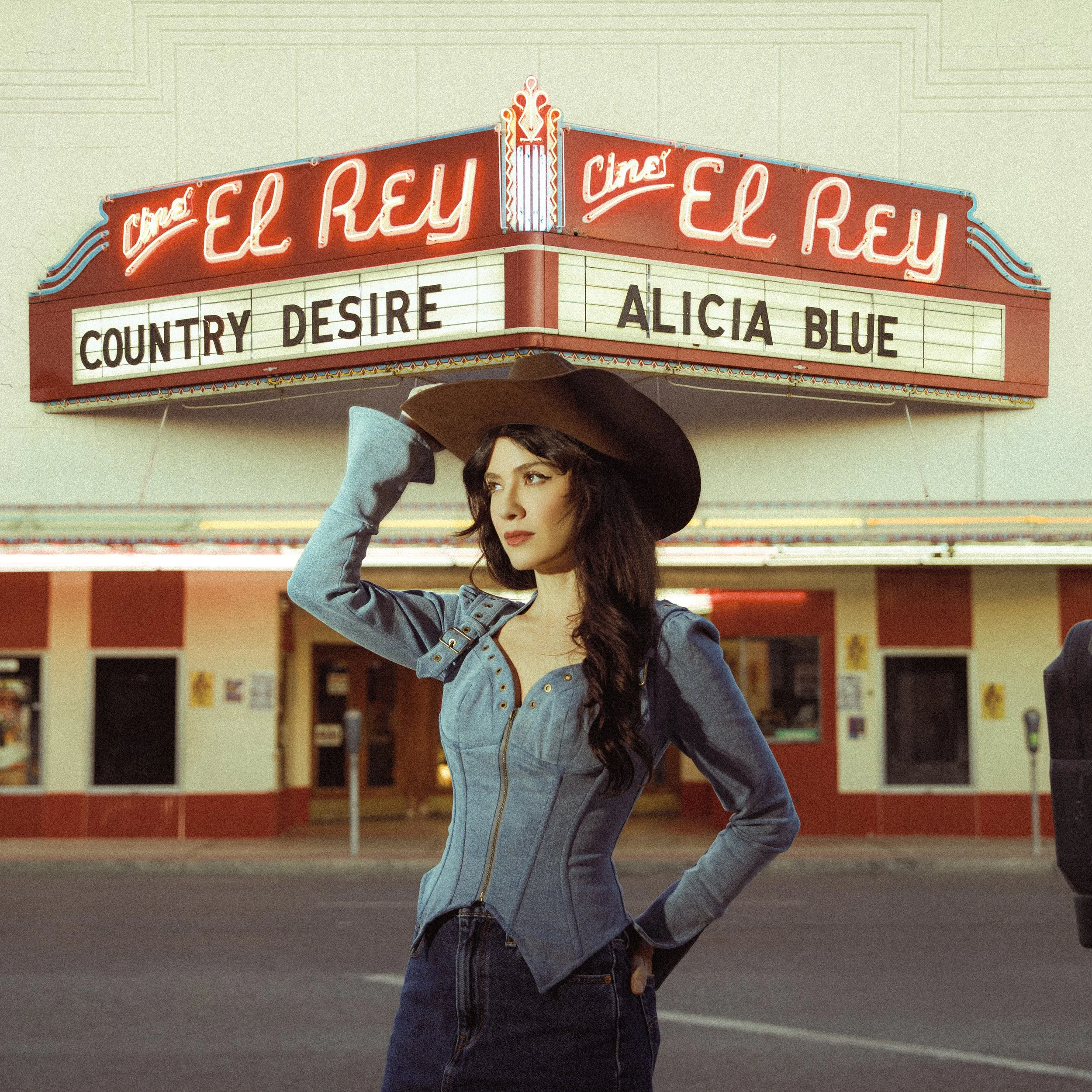
Cover art by Yiota Katsaitis